
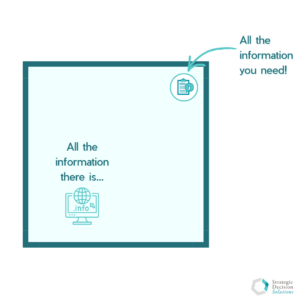
The information we have at our disposal today can be considered both a blessing and a curse.
A blessing because it has never been so easy to learn something, especially if it’s a subject we know little about.
BUT on the other hand…
Today’s age of never-ending, on-demand information can also create confusion, overwhelm, and stagnation, which can very easily lead to the analysis paralysis trap.
We, and I include myself here, often have the mistaken view that we must learn about something A-Z before applying it. (In everyday lingo, I would say: “I have to learn all the things about the stuff before I can do the stuff.”)
This mindset is a principal reason why many struggle to even get started with a project or some other initiative, according to entrepreneur and coach Pat Flyinn in his book Lean Learning: How To Achieve More By Learning Less.
Think about a company wanting to start a new way of doing something. The leaders want to know what the entire journey is going to look like before they approve taking the first step.
In today’s world of fast change and endless choices, it isn’t what you know but how effectively you apply the knowledge.
Therefore, what’s needed in this situation is a process for learning the right information at the right time to solve the right problem(s).
This is what Pat is referring to with the term lean learning, which helps you…
“…identify what’s essential for your growth [or to take the next step] and eliminate all the distractions that bog you down.”
What often happens is that we think that if we read one more book, listen to one more podcast, or watch one more webinar, we will find some nugget that will change the game. The result too often is stagnation. You really only need to know a small slice of what’s truly available to get started.
If you ever find yourself bogged down with information overload and unable to take those first steps, you should ask:
“If this were easy, what would it look like?”
…or for short, ITWEWWILL.
(Coincidentally, Pat has another long acronym he uses when ripping packs on his Pokémon YouTube channel ShortPocketMonster. “Should I Open It, or Should I Keep It Sealed?” or SIOIOSIKIS. My family and I are always eager to see what he opens).
Sorry – side detour over. Getting back to the original question, “if this were easy, what would it look like?”
The purpose of the question is to remind ourselves that perfect conditions are not necessary to get started, regardless of how much information we have.
Once a first step is known, any additional information will just confuse and overwhelm you in a never-ending cycle.
The real information that will help comes after or “…on the other side of iterations.” Pat explains how rapid iterations based on continuous feedback loops will ensure progress over extensive planning and perfect execution.
How it works looks something like this:
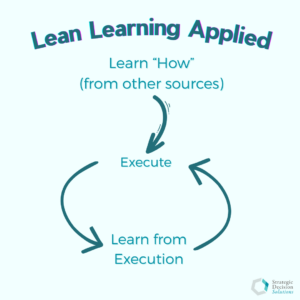
Applying this concept to ERM, lean learning means forgetting the degree programs, certifications, or otherwise trying to know everything from A-Z, and just TAKE THAT FIRST STEP.
Since every organization has a different culture and needs, establishing or otherwise moving the ERM needle will naturally undergo much revision – you will have to tinker until you find what works right.
This reality of ERM makes it a great candidate for applying lean learning principles Pat discusses in his book. Some specific examples based on the situation or perspective include:
- New to ERM – if you’re in the early phases of introducing ERM or otherwise trying to learn more about how it can help your organization, try to focus on the details of the first step and not the whole mountain. While you need to understand the big picture to begin with the end in mind, understanding the minutiae of everything right out of the gate is simply overwhelming.
- Established ERM program – if you’ve been at it awhile, it’s good to go back for a refresher and to learn ways to tweak your processes. However, you should cap the amount of material you take in, be it a certification program, books, webinars, and yes, even blogs. [wink] Focus on a single topic or way of changing, learn, execute, move on.
- ERM speaking to the business – how you share information with the business is one of those weak links that doesn’t receive the attention it deserves. The best thing to remember is to only share what you have to in the moment. If you’re in the middle of identifying risks, don’t talk specifically about a later phase like monitoring. Doing so can easily be overwhelming to the listener.
I want to be clear…
The point of today’s article is NOT to discourage learning.
None of us would be where we are without it. We need a growth mindset to keep moving forward. And I don’t regret any of the learning I have done to date.
But as Pat explains in his book, there comes a point where doing so can do more harm than good.
Like procrastination, the tendency of perpetual learning where we continuously increase knowledge instead of applying what we know, is rooted in fear.
Taking that first step and learning based on continuous feedback can be the key to bridging that gap between having knowledge and gaining value from the knowledge.
I am delighted to include Pat’s book in the most recent annual resources list. It’s an easy read and well worth diving into, especially on specific topics, but not at the expense of making progress on helping your organization make risk-informed decisions.
It may seem contradictory to provide this kind of advice on a blog that publishes weekly. However, my articles are written with the approach of providing what you need in the moment in bite-sized pieces. But if you tried taking all 350+ articles in at once, you would probably click away in frustration.
What tactics do you use to avoid information overload?
Join the conversation on LinkedIn to share your thoughts!